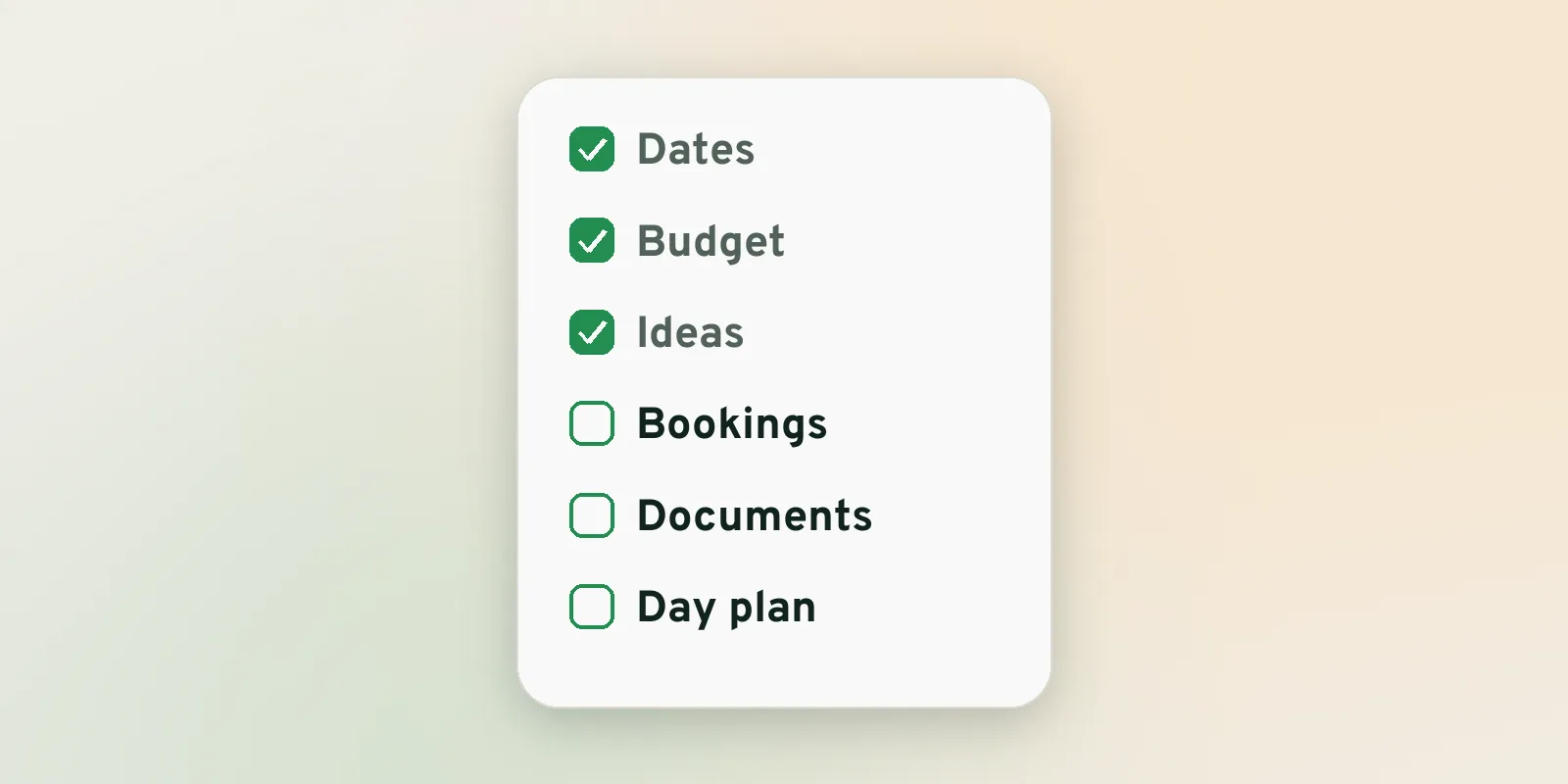
How to plan a trip with friends, in one sentence: decide the big things together (dates, budget, destination) and then hand each job to one person, with everything written down in one place the whole group can see. Most group trips don’t fail on the destination. They fail in the group chat: three versions of the plan, nobody sure who booked the hotel, and an awkward money conversation on the last night.
This guide walks through how to plan a group trip step by step, from the first "we should go somewhere" message to settling up after you’re home. It works for a weekend away with two friends, a beach vacation with a group of ten, or an international trip with friends who live in different countries: the way you plan a vacation with friends is the same at any size.
Step 1: Agree on dates before anything else
Dates are the hardest thing to change later and the easiest thing to argue about, so settle them first.
- Offer two or three date options, not an open question. "Who’s free in June?" gets twenty replies. "12–16 June or 19–23 June?" gets a decision.
- Use a poll. A date poll shows at a glance which option works for the most people. Set a deadline for answers, two or three days is plenty.
- Decide what happens if someone can’t make it. Usually: the dates that suit most people win, and nobody takes it personally.
Once the dates are fixed, put them somewhere permanent, not just in the chat history.
Step 2: Talk about money early (and honestly)
The single best tip for group travel: agree on a rough budget per person before anyone books anything. A friend who can spend €400 and a friend who can spend €1,500 will want very different trips, and it’s much easier to say so at the start than halfway through.
Agree on:
- A budget range per person for travel, accommodation and daily spending.
- What’s shared and what isn’t. Accommodation, rental cars and group dinners are usually split; souvenirs and solo activities aren’t.
- How you’ll split costs. Evenly, or by who took part? Pick one rule and keep it.
- One way of keeping track. Every shared payment gets written down when it happens, not reconstructed from bank statements later.
Step 8 below covers settling up; a travel itinerary template with a "Paid by" column keeps track until then.
Step 3: Collect ideas from everyone, then vote
Group trip ideas come from everywhere: a TikTok someone saved, a restaurant a colleague mentioned, a museum that one person has wanted to see for years. Collect them all in one list before you plan any days.
A shared list in Google Maps works for this: you can make a list "Shared" and invite collaborators so everyone can add places. Then let people vote or mark favourites. The places with the most votes go into the plan first, and the rest become options if there’s time.
This step matters more than it looks. When everyone has had a say in the list, nobody feels dragged along, and the "can we also…" requests during the trip mostly disappear.
Step 4: Give every job an owner
"Who’s booking the flights?" is the most-asked question in any group trip chat. Answer it once, for everything:
| Job | Owner | Done? |
|---|---|---|
| Accommodation | One person books, everyone pays their share | |
| Flights or trains | Each person books their own, or one person books all | |
| Rental car | Whoever will drive, with a second driver named | |
| Activities that need tickets | One person per booking | |
| Restaurant reservations | One person for the whole trip |
One owner per job means no double bookings and no gaps. Ask everyone to add each confirmation (booking number, address, check-in time) to the shared plan as soon as they have it.
Step 5: Check documents for everyone in the group
When you plan an international trip with friends, check the travel documents for every person, not just yourself. Groups often mix nationalities, and the rules can differ.
For example, within the EU, EU citizens can travel with either a valid passport or a national ID card. Friends from outside the EU visiting the Schengen area need a passport that is valid for at least three months after the date they leave and was issued within the last ten years, and some nationalities need a visa. A friend who finds this out a week before departure can sink the whole trip, so ask early.
Step 6: Turn the ideas into a day-by-day plan
Now plan the days. A good group itinerary is realistic about time:
- Group places by area. Visiting the three things in the old town on one day beats crossing the city three times.
- Add travel times between stops. Ten minutes on the map is often thirty with a group of six who stop for coffee.
- Leave gaps. One unplanned afternoon per two or three days keeps everyone sane, and gives early risers and late sleepers some time apart.
- Mark what’s booked. Fixed times (a museum slot, a dinner reservation) anchor the day; everything else can move.
If you need a starting point, our travel itinerary template shows a day-by-day format that works for groups. Whatever you use, the plan should be shared and live, so a change made by one person is seen by everyone, not sent as a screenshot.
Step 7: Plan for the trip itself
Most trip planning stops at departure, but a group needs a little structure on the road too:
- Agree on a morning meeting time each day, the night before.
- Download offline maps for the area in case someone’s data runs out. In Google Maps you can download an area for offline use; downloaded maps expire, so update them before you leave.
- Split up without guilt. Not everyone has to do everything. Agree where and when you meet again.
- Keep the plan updated. When the day runs late, drop the least important stop and tell everyone in one place.
Step 8: Settle up fairly, and quickly
Settle the money within a few days of getting home, while everyone remembers what they paid for. If every shared expense was written down during the trip (step 2), this takes minutes: add up what each person paid, compare it with their share, and work out who pays whom. With a few people paying different things, there’s usually a way to settle with far fewer transfers than "everyone pays everyone back".
Planning a group trip: a checklist
Copy this into your group’s shared notes and tick it off:
- Dates agreed and written down
- Budget per person agreed, and the rule for splitting costs
- Ideas collected and voted on
- Every booking has an owner
- Passports, ID cards and visas checked for everyone
- Day-by-day plan shared with the group
- Offline maps downloaded
- Shared expenses written down as they happen
- Settled up within a week of getting home
What makes group travel easier
A few habits come up again and again in good group trips:
- One organiser, but not one decider. Someone keeps things moving; the group still decides together.
- Write it down once. Dates, bookings, the plan and the money in one shared place, not spread across chats, emails and notes apps.
- Plan less than you think. A trip with friends is about the friends. Fewer stops, more time together.
Apps built for planning a trip with friends bring these together: a shared plan, the bookings and who paid what. Travel Whoop is one, made for exactly this, and it’s free.
Frequently asked questions
What is the best way to plan a trip with friends?
Agree on dates and a budget first, collect everyone’s ideas in one shared list and vote on them, give each booking an owner, and keep the day-by-day plan and the expenses in one place the whole group can see.
How far in advance should you plan a group trip?
For an international trip with friends, start two to four months ahead so everyone can get time off and book affordable travel. A weekend away can be planned in a few weeks. The bigger the group, the earlier you should fix the dates.
How do you plan a group trip when everyone wants something different?
Collect every idea first, then vote. Plan the top choices together, and leave free time so smaller groups can do their own thing and meet up later.
How do you split costs on a trip with friends?
Agree on the rule before the trip (evenly, or by who took part), write down every shared payment when it happens, and settle up within a few days of getting home with as few transfers as possible.
Is there an app to plan a trip with friends?
Yes. Group trip planner apps let everyone see and edit the same plan, add bookings, vote on places and track shared costs. Look for one that works for everyone in the group, on any phone or in a browser, without everyone needing to pay.
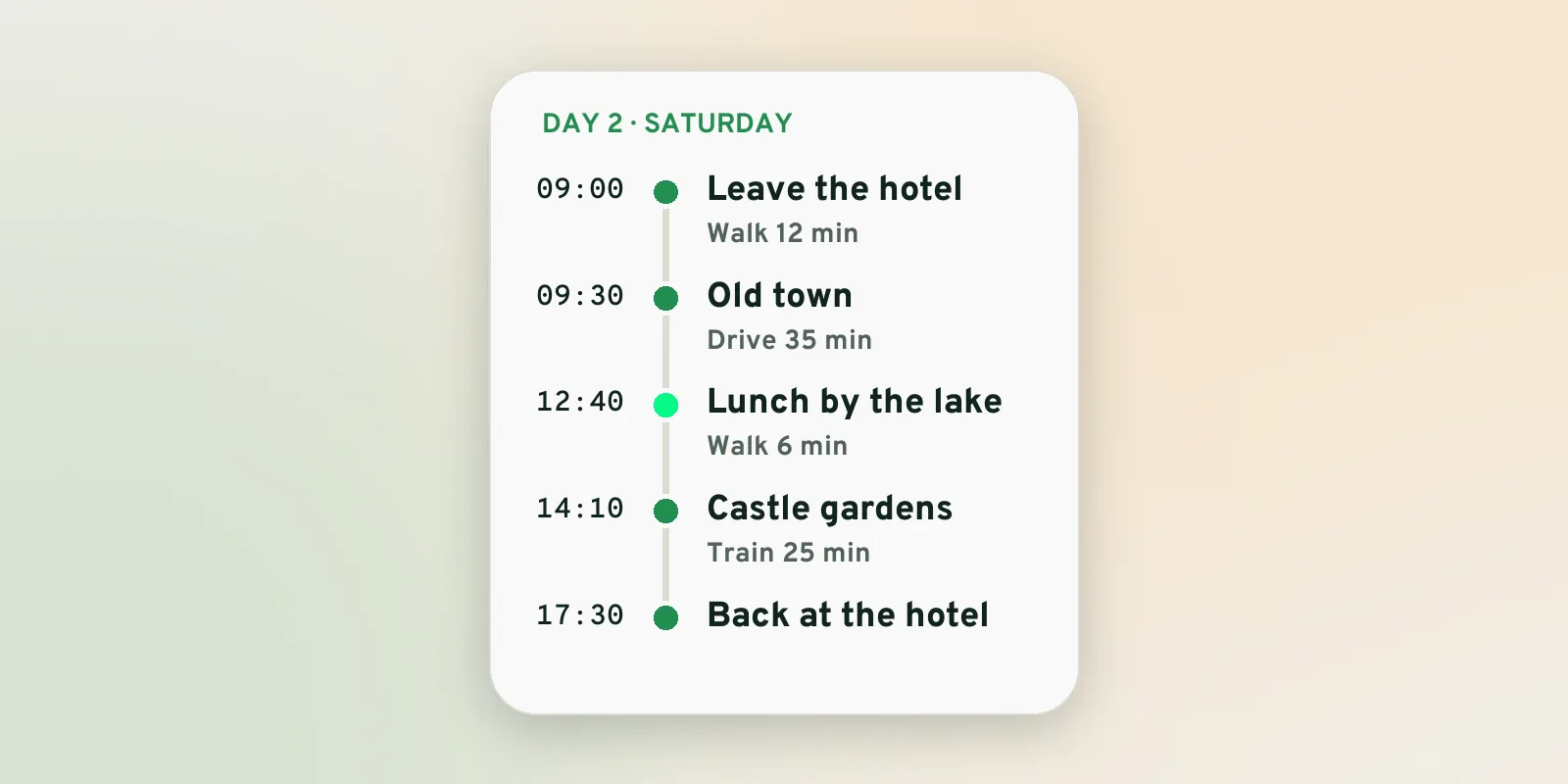 Travel itinerary template for groups and families
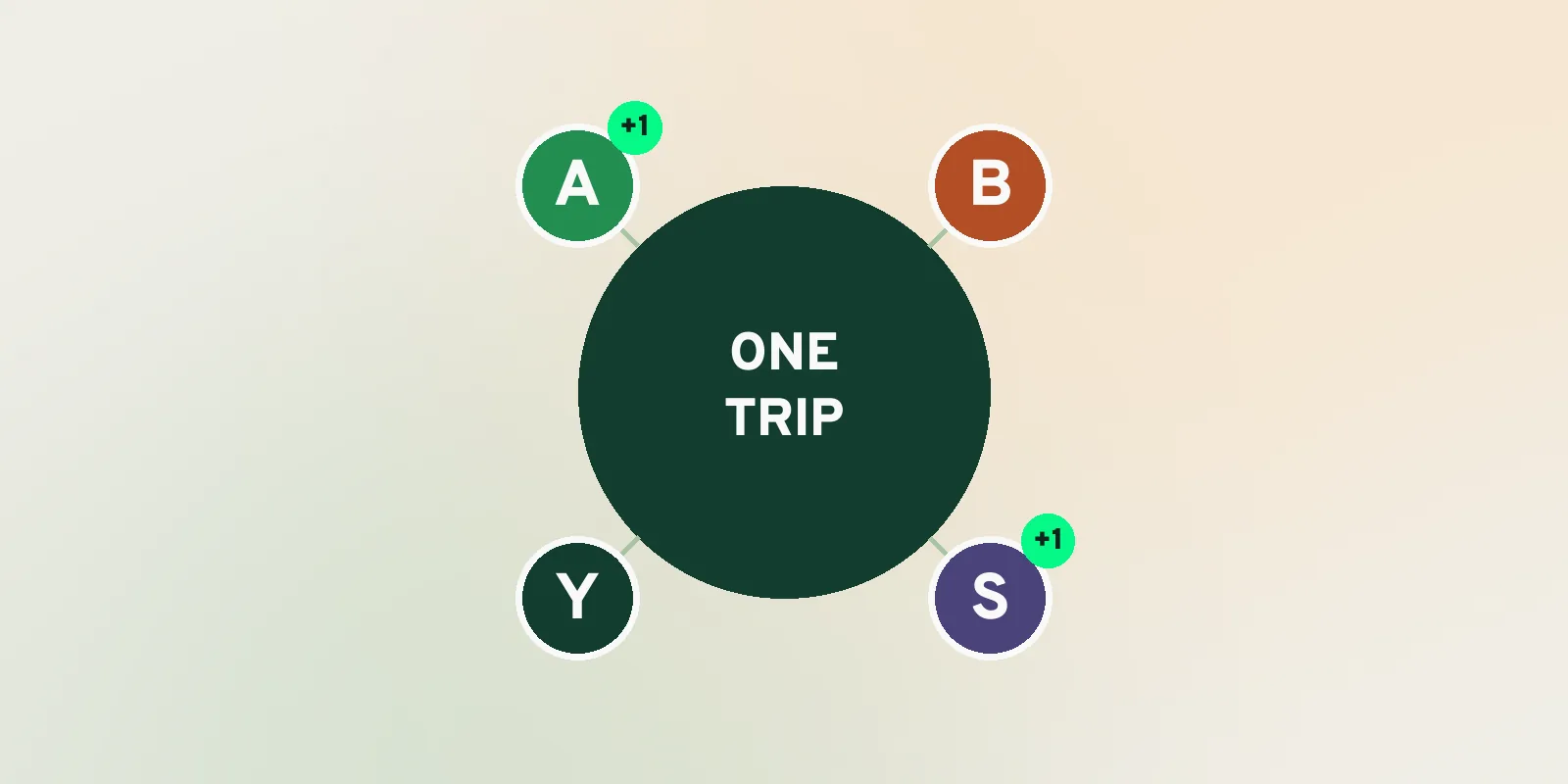 How to choose a trip planner app (what really matters)
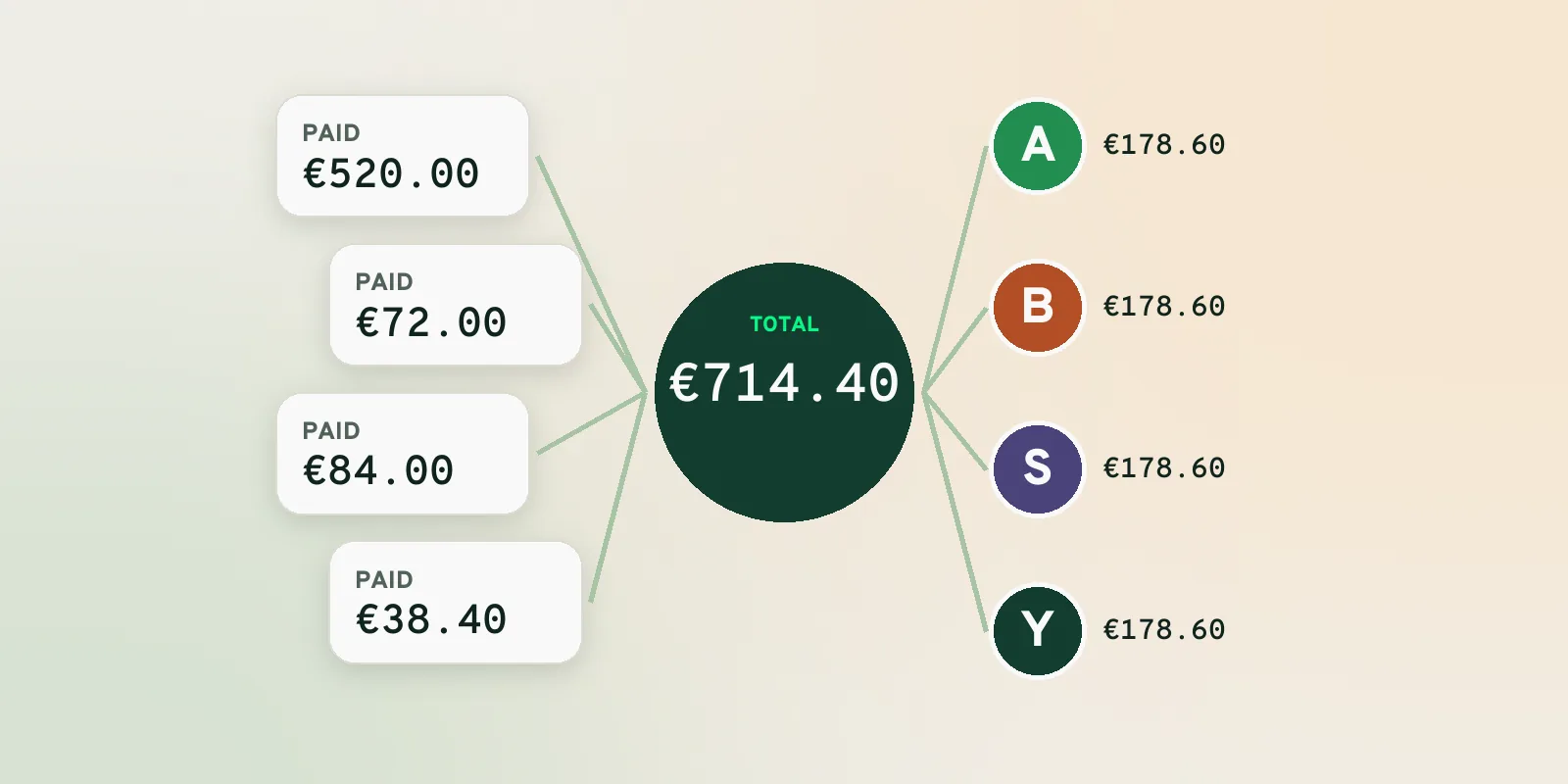 How to split costs on a group trip, fairly
 Travel guideUnlock Over €100 FREE Adventures with Kufsteinerland Card in Kufsteinerland – Here’s How!
 Travel guideThe Ultimate List of 8 Things to Do in Kufstein, Austria you can’t miss
 Travel guideEkta Travelling Online Travel Insurance: A Step-by-Step Guide and Review